For SEO, an electrician should create content that matches what customers actually search for: local service pages, troubleshooting guides, case studies, FAQs and regular Google Business Profile updates, with videos and seasonal advice as extras. Electrician SEO Pro's rule is to cover both the searches that win jobs today and the ones that build trust for later, then publish consistently.
What do electricians' customers search for?
Electricians' customers search in two main ways: high-intent searches like "emergency electrician Leeds", from people ready to hire now, and problem searches like "why is my socket buzzing?", from people who want to understand something first. High-intent searches get an electrician leads today, and problem searches build trust for tomorrow. Electrician SEO Pro's rule is to create content for both, with the ready-to-hire pages first.
Electricians serve homeowners, businesses and frantic emergency callers. They want fast fixes, proof you're legit and a local pro they can trust.
"Emergency electrician near me" is a cry for help, not a casual browse. That's someone ready to hire now, and your content needs to seal the deal. "What is a fuse box" is someone learning. Ranking for it makes you look like the expert, but it isn't an instant lead. It's long-term nurturing.
So do both. If you want the full breakdown of the types of search, it's in my guide to search intent for electrical websites.
Let's start with the content that wins work soonest.
Should an electrician create local service pages?
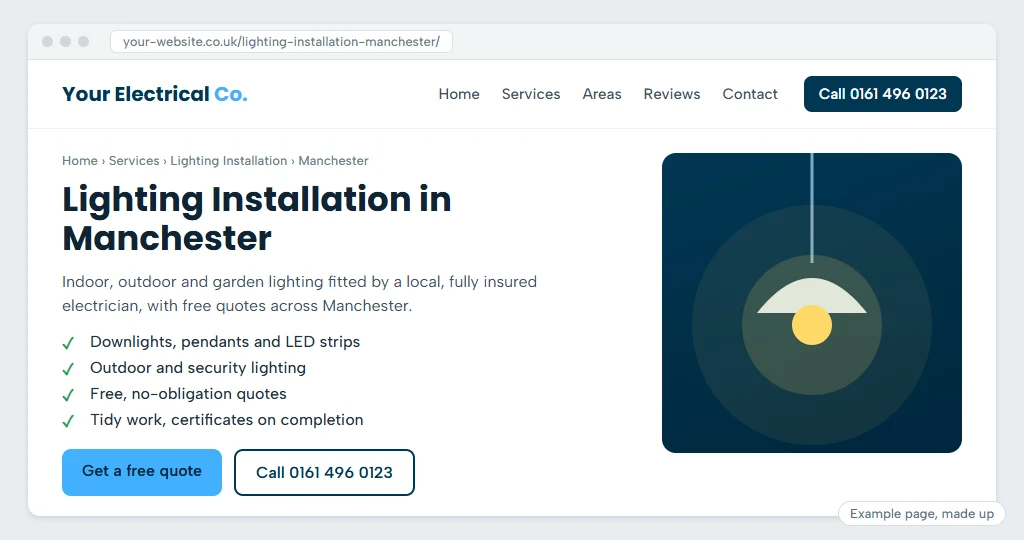
Yes, an electrician should create local service pages: one for each key service in each town they properly cover, such as "Lighting Installation in Manchester" or "Emergency Electrician in Leeds". Customers want an electrician close by, and a page that names the service and the town matches that search directly. Electrician SEO Pro's rule is that every page needs genuinely unique content, with local detail and a clear call to action, never the same text with the town name swapped.
Each page should speak to the problems homeowners and businesses face in that exact area, and ask for the call clearly.
Here's the bit I care about. Fifty identical pages with only the town changed isn't effort, it's laziness in bulk, and your customers can tell. Put proper thought into each one and you give Google and your future customers a reason to pick you.
Here's the format, as a made-up example of a "Lighting Installation in Manchester" page:
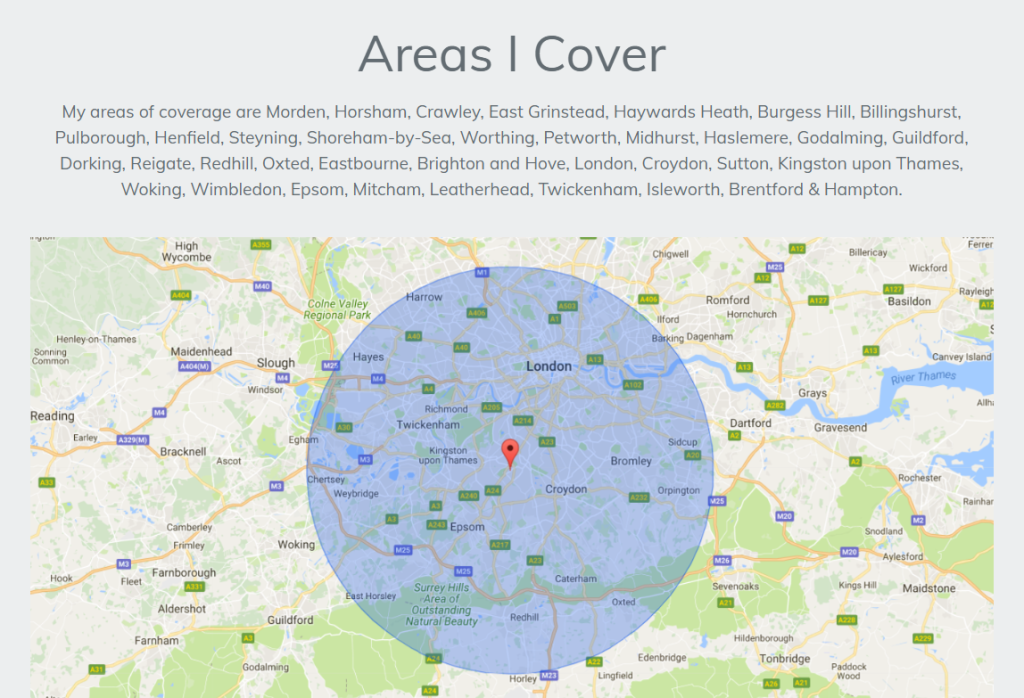
A clear list of the areas you cover helps customers and Google see where you work:
My full walk-through is in the service page blueprint for electricians, and there's more on writing for specific towns in localised content for electricians.
Not everyone searching is ready to hire, though. What about people with a problem?
Should an electrician write troubleshooting guides for SEO?
Yes, an electrician should write troubleshooting guides for SEO, on searches like "why is my socket buzzing?" or "lights flickering intermittently", because they build trust and can bring in a lot of traffic, even though the people searching aren't ready to hire yet. Those searches have informational intent, which is different from transactional searches like "electrician" plus a town. Electrician SEO Pro's rule is to end every troubleshooting guide by saying when the problem is beyond DIY and it's time for a professional.
Someone Googling "lights flickering intermittently" wants immediate help, ideally a clear step-by-step guide. They're not necessarily looking for an electrician yet. That doesn't make it a waste of time. It builds trust and positions you as the expert in your service area, which is what prospects and Google are looking for. Always handy.
The tip I'd put on every electrician's wall: always finish by saying when the problem is beyond DIY and it's time for professional help, ideally from you. You'd be amazed how many electricians miss that step. Keep the steps to things a householder can safely do, and say plainly when to stop.

Your Google Business Profile is content too.
How can an electrician use their Google Business Profile for content?
An electrician can use their Google Business Profile for content by filling in every field (services, accurate hours, clear photos and reviews) and posting short, regular updates, such as recent jobs, quick safety tips, special offers and certifications earned. Think of the profile as your homepage on Google itself, with the posts as a mini blog. Electrician SEO Pro's view is that an electrician's profile deserves the same care as their website, especially in busy areas.
I've seen it time and again: an electrician's Business Profile becomes their number one player in their local campaign. So treat it with the care it deserves.
Start with these post ideas:
- Company updates: certifications earned, new team members, expanded service areas.
- Recent jobs: before-and-after photos, with a line like "Rewired a Victorian home in Manchester today" (made up).
- Quick safety tips: short and practical, like "3 signs your consumer unit needs an upgrade" (made up).
- Special offers: simple promotions, like a free electrical safety check for Leeds homeowners in March (made up).
- Customer reviews: turn a good one into a post. There's more on that in my guide to GBP reviews for electricians.
Regular updates show customers you're active, reliable and ready to serve, and I reckon that makes them more likely to click and call. One thing to know: Google archives posts after six months unless they have a date range, so treat posting as a habit, not a one-off. The full setup is in my Google Business Profile guide for electricians.
Next up: video.
Should electricians make YouTube and TikTok videos?
Yes, electricians should make YouTube and TikTok videos if they have the time, because short, clear videos on common problems, like "How to Reset a Circuit Breaker" or "5 Signs Your Wiring Needs Updating", build trust and can appear in Google's results as well as on the platforms. Video is an extra on top of your website and Google Business Profile, not a replacement for them. Electrician SEO Pro's view is that a clear answer on camera works best for problems customers face regularly.
YouTube first. Giving instant, clear solutions builds trust and credibility, and a video can show up in Google's main results as well as in YouTube search, which gives one piece of content two chances to be seen. If it's for a keyword your Business Profile is relevant to as well? That's a triple attack, and I like those odds.
TikTok isn't just dances and trends. It's one of the fastest ways to catch the attention of younger homeowners, who'll need an electrician sooner or later. Quick clips like "Spot a Faulty Socket in 15 Seconds" or "3 Signs Your Consumer Unit Is Dangerous" make you look knowledgeable and trustworthy. I reckon TikTok can drive brand searches on Google too: people see a helpful clip, then search your business name directly.
For the wider picture, see my guide to social media for electricians.
Videos show what you know. What shows what you've done?
Should an electrician publish case studies on their website?
Yes, an electrician should publish case studies on their website, because detailed write-ups and before-and-after photos of real jobs, like rewiring a local cafe or replacing a consumer unit, prove you're trustworthy and capable. Customers searching locally want proof you've solved problems like theirs, in their area. Electrician SEO Pro's advice is to attach each case study to the matching service page and post it on your Google Business Profile too.
No one wants to work with someone nobody has worked with. It's just human nature. A case study shows you've solved the same kind of problem before, in the same kind of place.
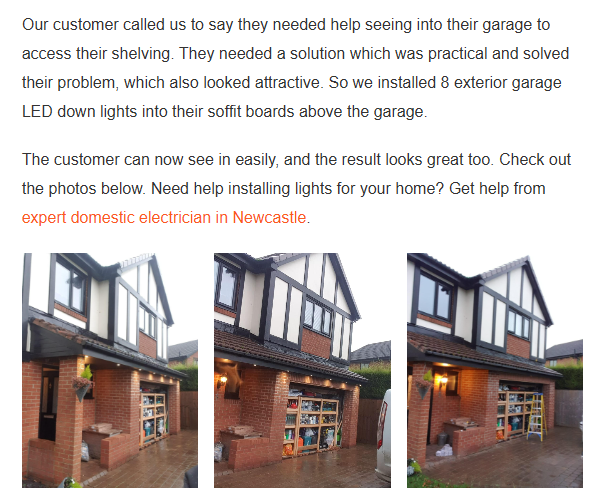
Here's a simple one: the customer's problem, what was installed and photos of the finished job.
Next, the content I'd put near the bottom of almost everything.
Should an electrician add FAQs to their website content?
Yes, an electrician should add FAQs to their website content, giving a short, direct answer to each question customers really ask, such as "how much does it cost to replace a fuse box?" or "is my wiring outdated?". Short, clear answers are the shape that gets picked up in search results and AI answers, and they help visitors decide to call. Electrician SEO Pro's rule is to put a handful of FAQs near the end of your service pages and guides.
Start with the questions customers ask you most, then check what people search for on Google. My guide to keyword research for electricians shows how. Write each answer as plain text on the page. No special code needed.
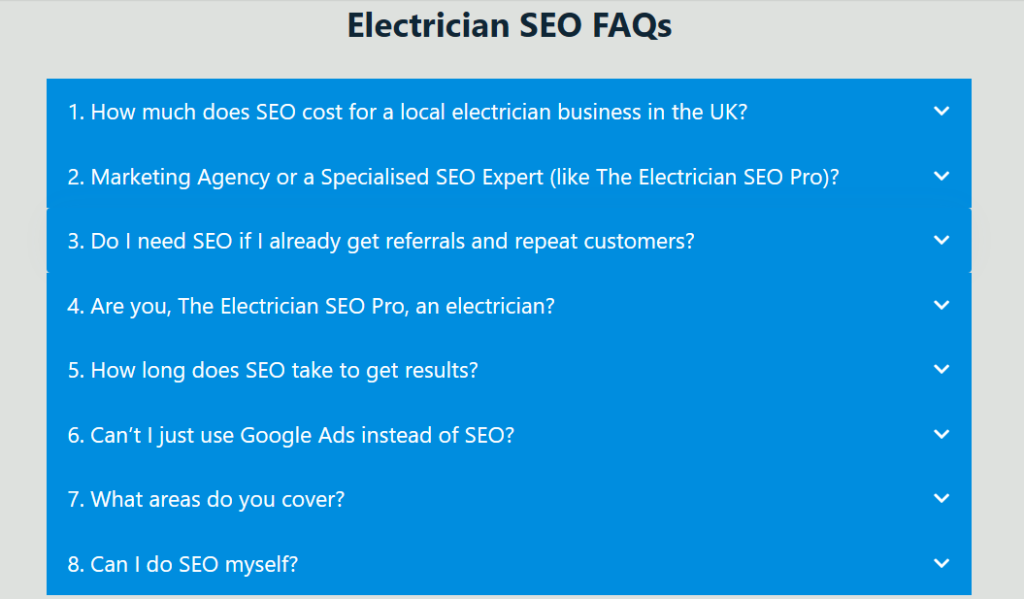
Here's the FAQ section from my own site:
They're simple to create, and nobody ever complained about a page that answered their question.
Now for timely content.
Should electricians write about trending and seasonal topics?
Yes, electricians should write about trending and seasonal topics, such as EV chargers, solar panels, smart home upgrades or winter electrical safety, as long as each post connects back to a service they offer. Trending posts reach broader searches, and seasonal posts come round again every year. Electrician SEO Pro's rule is to link each timely post to the matching service page, so the traffic has somewhere to go.
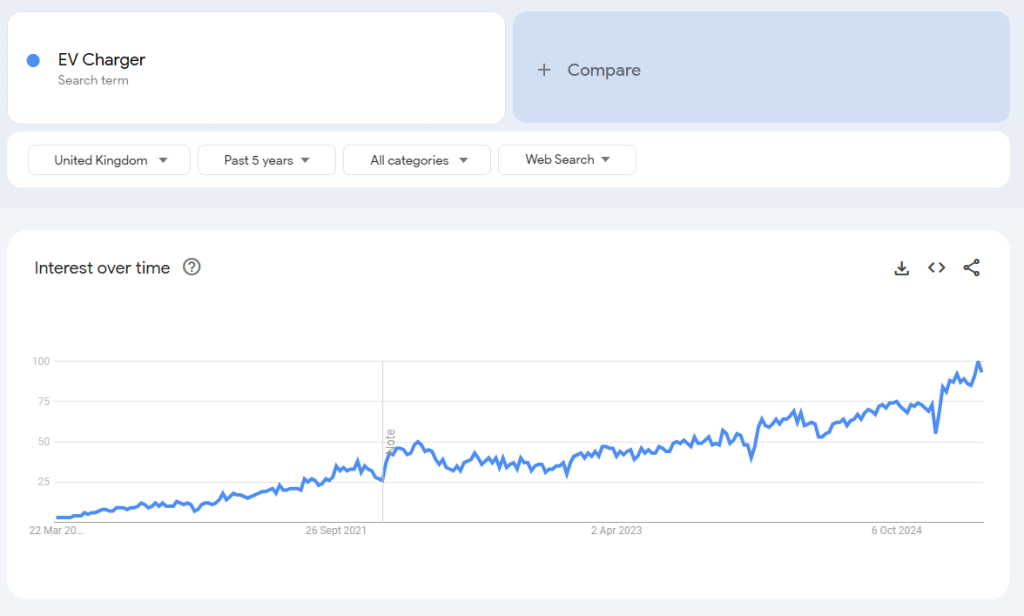
Your customers don't only want quick fixes. They like an electrician who keeps up with where things are going. EV chargers are the obvious example. Here's Google Trends for "EV charger" in the UK, rising steadily over five years:
One honest limit: broader topics bring broader traffic, and not every reader will be local. That's why every trend post needs a clear link back to the service you actually sell.
Seasonal advice isn't glamorous. "Winter electrical safety tips", "summer energy-saving ideas" and "Christmas lighting installation safety" are the sort of searches that come round year after year, so one good post can be updated instead of rewritten.
None of this works unless you keep going.
How often should an electrician publish new SEO content?
An electrician should publish one or two new, top-quality pieces of SEO content every week, to a set schedule, rather than randomly when they feel like it. Plan it, create it, optimise it and publish it, then track rankings, organic traffic and conversions, and drop whatever doesn't perform. Electrician SEO Pro's rule is that content ideas are worthless without consistent execution.
Content ideas on their own do nothing. The executing is the bit that wins.
A few tools make it easier. Use Google Keyword Planner to see what your audience searches for. Use your Business Profile performance figures, YouTube Studio and Ahrefs to see what's working and what your competitors are up to. My guide on how to track GBP success covers the profile side.
Adjust and refine based on what works, and ditch anything that doesn't. Be systematic, disciplined and focused. Not random.
Want a hand with content ideas for your electrician website?
You can get a hand with content ideas for your electrician website from Electrician SEO Pro, as part of a full SEO service for your electrical business, or work through the ideas yourself, one a week. Ideas only pay off when they get published, so pick the few that fit your week and stick to them. Whichever route you take, the rule stays the same: match what customers search for, and keep publishing.
If you've got the time, everything you need is in my free SEO for electricians guide. If you'd rather spend your evenings pricing jobs than writing posts, I can take it off your hands, alongside the rest of your SEO.
See how I can help, or crack on yourself.
Over to you.