Yes, an electrician should do guest posting for SEO, as long as it's done properly: writing a genuinely useful article for a relevant, real website in return for credit and a link back. Done as a brand and trust play, it can earn backlinks, local recognition and new customers. Done as a link hack on spammy sites, it can backfire. Electrician SEO Pro's rule is value first for the reader and the site owner, link second.
What is guest posting for electricians?
Guest posting, also called guest blogging, is when an electrician writes an article that gets published on someone else's website instead of their own. The aim isn't to waffle on about your services. It's to build your name as a local expert, get in front of new audiences who could become customers, and earn a link back to your site. Electrician SEO Pro treats it as a brand and trust play first and a link tactic second.
Think of it as proving you're not just another random electrician with a van. Someone else's readers see your name next to genuinely useful advice, and you earn a backlink on top. If backlinks are new to you, start with my guide to backlinks for electricians.
There's no ad bill, which is the big difference from Google Ads. It costs you time instead, and it isn't an overnight win.
So does it actually move you up Google?
Does guest posting help electricians rank?
Yes, guest posting can help electricians rank, because the link back to your site is a backlink, and Google uses links from other websites as a ranking signal. The link only helps when it sits on a real, relevant site and the article is genuinely useful. Google's spam policies treat paid posts that carry links, and links with optimised anchor text in guest posts distributed on other sites, as link spam, and sites that break them may rank lower or not appear in results at all. Electrician SEO Pro's view is that a guest post should earn its link by being worth reading.
Google's spam policies spell this out: payment for articles that include links is link spam, and so are links with optimised anchor text in guest posts distributed on other sites. A post written for readers, with a normal link in your bio or one natural sentence, is a different animal.
Some sites tag guest post links nofollow, and those do little for rankings, though readers can still click them. My backlinks guide explains the tags. One post is also just one link, so don't expect it to transform your rankings on its own. In my view, done right it's one of the more reliable link-building routes for a tradesperson, because it's in your hands rather than your budget.
So where do you find sites worth writing for?
How can an electrician find guest post sites worth writing for?
An electrician can find guest post sites worth writing for by searching Google for phrases like "write for us" electrician or "become a contributor" construction, checking where competing electricians and other trades have been featured, and looking at local blogs, community sites and local press. A good site is relevant to the trade or your town, publishes readable, helpful articles and has real signs of an audience. Electrician SEO Pro's test is simple: if you wouldn't send a customer there, don't send Google there.
Pop these into Google:
- "write for us" electrician
- "guest post" electrical blog
- "submit an article" home improvement
- "become a contributor" construction
They turn up trade blogs, renovation sites and even local newspapers that take contributions. Scroll past the spam and look for real sites with real audiences.
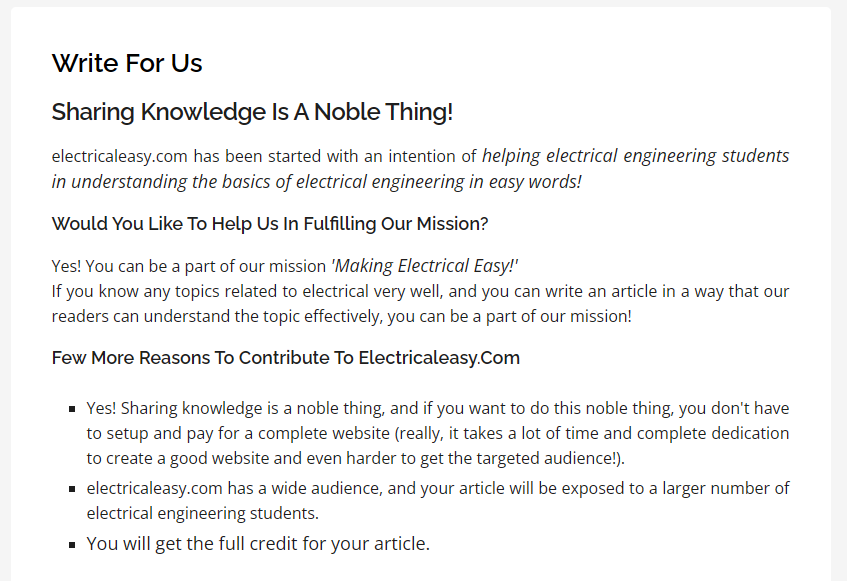
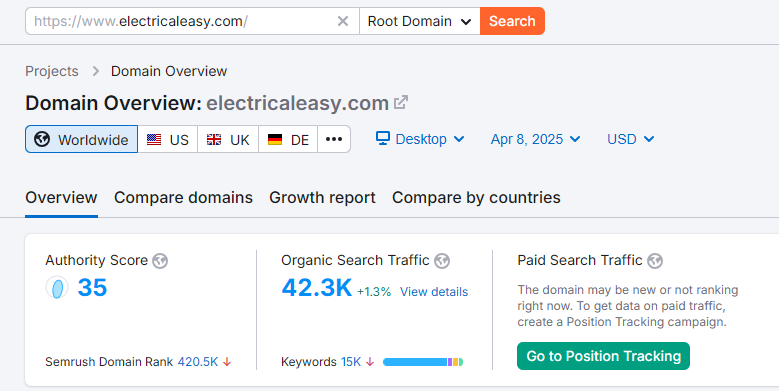
One I found on my very first search was electricaleasy.com. Semrush showed 42.3K organic search traffic and an Authority Score of 35 when I took the screenshot, so it has readers. But its Write For Us page says the site exists to help electrical engineering students, which isn't where a local electrician's customers are. Traffic isn't the same as fit.
Also look at other electricians and tradespeople in your area. Do they show "As seen in" or "Featured on" logos? Click through and list those sites: they take outside voices, and may well take yours. And don't get hung up on landing a spot on Forbes. A blog or newsletter run by your local council, a small-town paper or a community group in your service area can be gold for an electrician, because it carries local relevance and often plenty of trust.
Run every site on your list through three checks:
- Relevance. Home improvement, property management, DIY advice, local business: anywhere your post fits naturally.
- Quality. Have a scroll. Readable, helpful articles, or something slapped together in 2009 and left to rot? Weird grammar, dodgy ads and nonsense posts are a skip. You're not trying to get a backlink from a digital landfill.
- Authority. Signs that people visit and trust it: it ranks in Google, has recent posts, gets comments or shares, and you'd be proud to have your name on it.
The site doesn't need to be massive. It just needs to be real.
Once you've got a shortlist, you need an idea they'd actually want.
What should an electrician write a guest post about?
An electrician should write a guest post about a topic that is new to that site, relevant to the trade but not about the business, and interesting to the site's own readers. Homeowners, landlords and property managers want practical advice, not a sales pitch. Electrician SEO Pro's rule is to study the target site first, then pitch an idea only that audience would want.
Take five minutes with the site before you pitch. What do they publish? Guides for homeowners, or advice for landlords and property managers? Skip this and you go in blind, annoy the editor through laziness and risk getting yourself blacklisted. See whether they have a page explaining how to pitch, because some spell it out line by line:
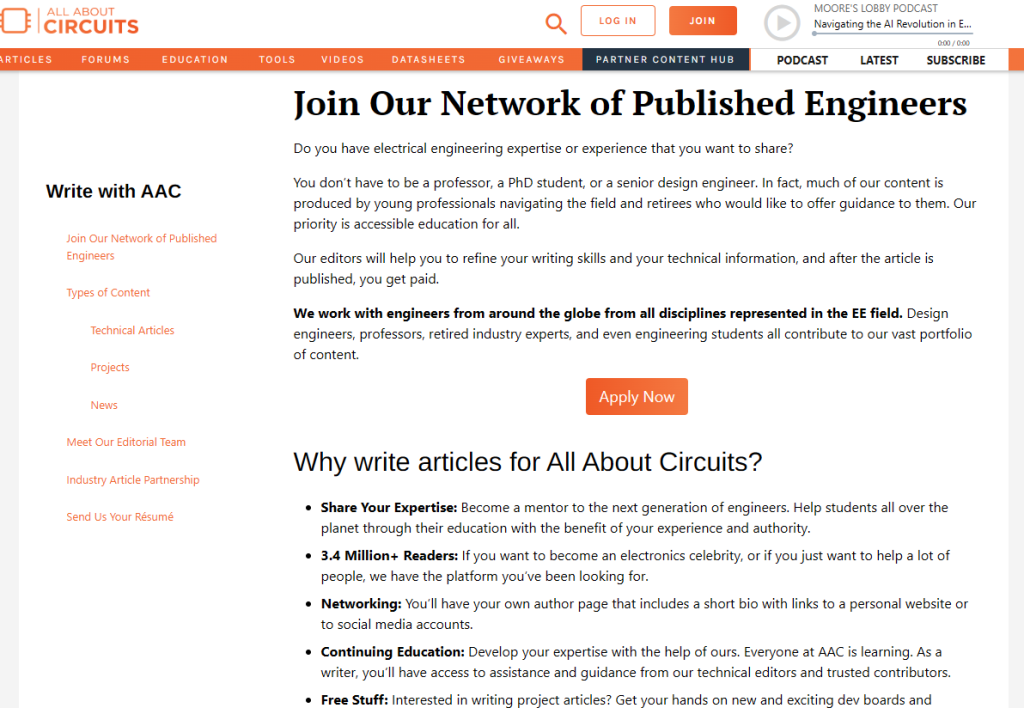
Then read a few of their posts and see how readers respond. Comments and shares show what that audience engages with. You're writing for their readers, not for you.
If you want the post to bring in Google traffic as well, back the idea with real search data. Google Keyword Planner and Google Trends can show what people search for and what's rising, and I cover the method in keyword research for electricians. More topic starters are in my guide to content ideas for electricians. Even a keyword with low volume can work if the intent is right, and if you start with the title, the outline follows.
A few ideas, all made up:
- "How Often Should Landlords Get an EICR?" for a landlords' blog.
- "What a Burning Smell From a Socket Means, and When to Call an Electrician" for a homeowners' site.
- "What to Check Before Hiring an EV Charger Installer" for a home improvement blog.
Got a topic? Now to write it so they'll actually publish it.
How should an electrician write a guest post?
An electrician should write a guest post like a helpful article, not a sales pitch: plain language, short paragraphs, proper headings and a few bullets where they help. Fit the host site's style, link to one of the host's own posts to show you've read it, and keep your own link to your bio or one natural sentence. Electrician SEO Pro's rule is that if a guest post reads like an advert, the editor will probably bin it.
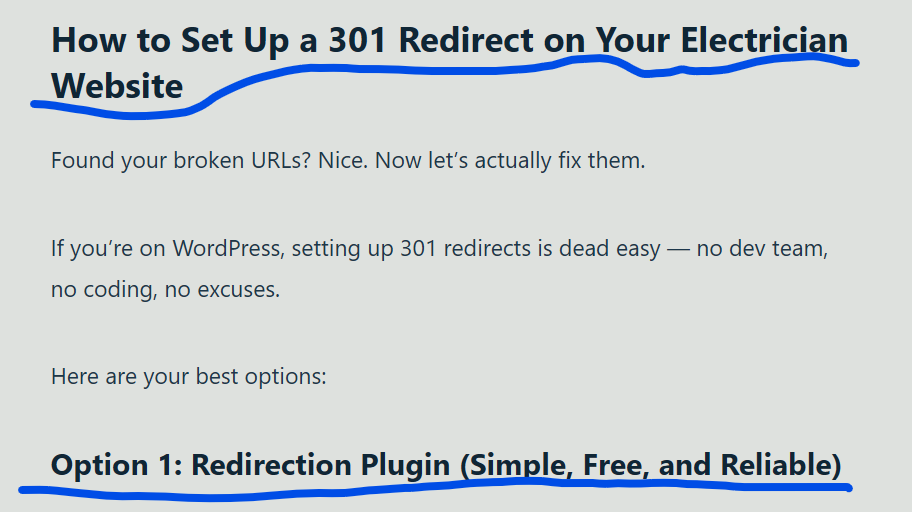
Clean formatting, short paragraphs and proper headings do most of the work. Bullets help, but don't overdo them or it reads like a robot wrote it:
Link to one of the host site's own posts. Most site owners appreciate that. Then one link back to your own site, ideally in your bio or as part of a helpful sentence, and don't force it. Keep the wording of the link natural too, which my guide to anchor text for electricians covers.
Got a photo from a real job? Even better. Write like a real human, help their readers, and leave the pushy sales for the leaflets through the door. A good post can get you asked back, or introduced to the site owner's other websites.
Written it? Now you have to get someone to read it.
How should an electrician pitch a guest post?
An electrician should pitch a guest post with a short, personal email that says who they are, why they're relevant to the site's readers, and one specific idea with a working title, ideally with the article already written. Skip the vague "can I write for you?" line and the sales talk. Electrician SEO Pro's advice is to keep it to a few sentences and give the editor no reason to say no.
Here's the sort of email I'd send (all made up):
Hi Sam, I'm a local electrician based in Leeds, and I've been following Leeds Landlord Weekly for a while. I'd love to contribute a guest post that's genuinely useful to your readers. One idea: "How Often Should Landlords Get an EICR?" It's original, not salesy, and written to match your tone. I've already written it, so you can see exactly what you'd get. Shall I send over the Google Drive link? Cheers, Alex Smith, Smith Electrical www.example.co.uk
It works because it's short, personal and value-first. It leads with who you are and why you're relevant. It pitches a real idea. It shows initiative, because the post is already written. It's clear the post is helpful, original and non-salesy, and the tone is casual but confident. If the site's guidelines say to pitch before you write, follow them. Not every editor will reply, so move on to the next one on your list.
Say it lands. What now?
What should an electrician do after a guest post goes live?
After a guest post goes live, an electrician should share it, add it to an "As featured in" section on their own site, log it in a simple spreadsheet and thank the editor. Sharing gets the post seen by local people, a featured-in section builds trust with customers, and a log stops you pitching the same site twice. Electrician SEO Pro's view is that the thank-you matters most, because a first post can turn into an ongoing relationship.
- Share it. LinkedIn, Facebook, even local groups if it's relevant. You want people seeing your name out there.
- Show it off. An "As featured in" or "Seen on" section on your site builds trust, especially once you've stacked a few.
- Keep a log. A simple Google Sheet of where you've posted, so you don't pitch the same site twice, and you've got a growing list of wins.
- Check the link. Is it live, does it go to the right page, and is it tagged nofollow? My backlinks guide shows how to check.
- Say thanks. A quick message to the editor goes a long way, and that first post could lead to more opportunities down the line.
Last up: the ways it goes wrong.
What guest posting mistakes should electricians avoid?
The guest posting mistakes electricians should avoid are paying for posts on spammy sites, writing lazy articles just to squeeze in a link, repeating keyword-heavy anchor text such as "best electrician in Liverpool", and pitching sites nobody reads. Google's spam policies cover paid posts that carry links and optimised anchor text links in guest posts, and sites that break them may rank lower or not appear in results at all. Electrician SEO Pro's rule is simple: if the only goal is the link, don't write the post.
Google's spam policies say they detect this through automated systems and, as needed, human review that can lead to a manual action. Best case, in my view, the link gets ignored. Worst case, your site drops down the results.
Here's the difference in practice:
- Wrong: paying to be slapped on spammy sites nobody reads. Better: a smaller, real site with readers.
- Wrong: a lazy, low-effort article written just to squeeze a link in. Better: something you'd be happy to put your name to.
- Wrong: linking "best electrician in Liverpool" to your homepage every time. Better: a natural link in your bio or one helpful sentence.
- Wrong: writing about your own services. Better: writing about their readers' problems.
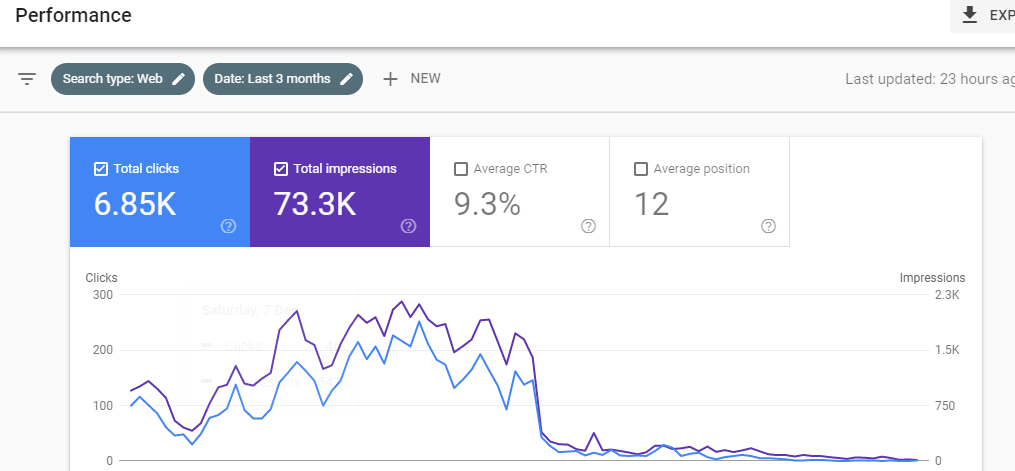
A Search Console graph like this one, with clicks and impressions falling off a cliff, is what nobody wants to see. Bad link habits are one way to end up there, not the only one:
Guest posting isn't an overnight hack, and it isn't about spamming your link across random blogs and hoping Google gives you a gold star. Google's already five steps ahead, so play it straight.
Want a hand with guest posting for your electrical business?
You can get a hand with guest posting for your electrical business from Electrician SEO Pro, as part of a full SEO service, or do it yourself by finding a few relevant sites, writing something genuinely useful and sending a short pitch. Guest posting is slow, so it works best as one part of your wider link building. Whichever route you take, the rule stays the same: write for their readers first.
If you've got the time, my free off-page SEO guide for electricians covers links and the rest of the off-page stage. If you'd rather spend your evenings quoting jobs than emailing editors, I can take it off your hands, alongside the rest of your SEO.
See how I can help, or crack on yourself.
Over to you.