Yes, backlinks matter for an electrician's website: a backlink is a link from another website to yours, and Google uses links as a ranking signal, so links from real, relevant sites help an electrician rank. Quality counts far more than quantity, and bought or bulk links can do harm. Electrician SEO Pro's rule for electricians is to earn a few strong links from sites that fit the trade or the town, rather than collect lots of weak ones.
What are backlinks for an electrician's website?
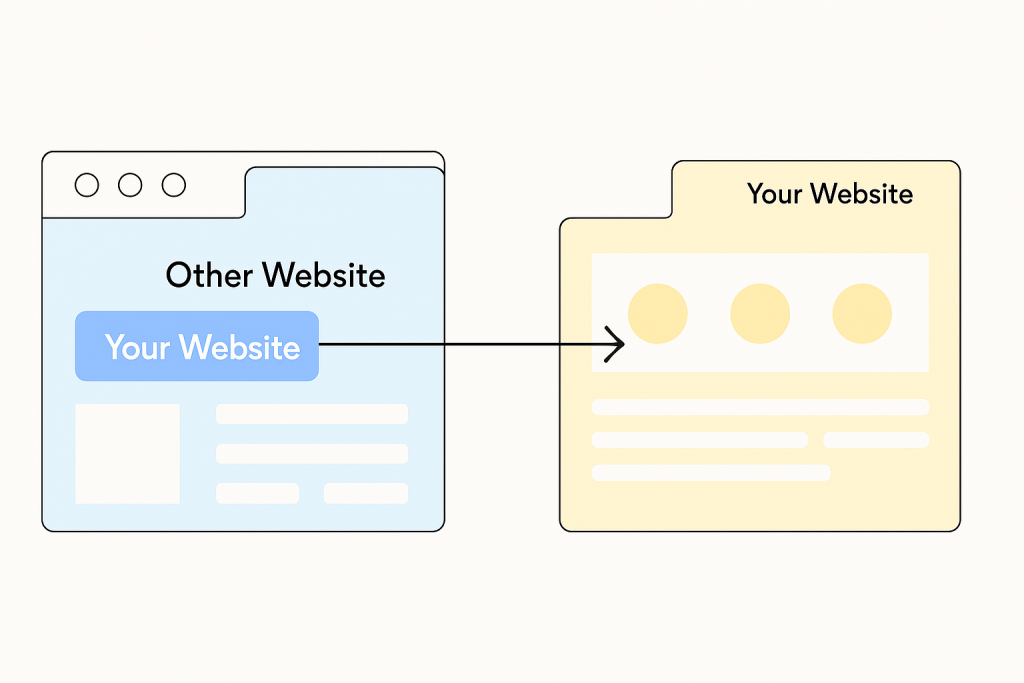
For an electrician's website, a backlink is a link from another website that points to yours. Building them on purpose is called link building. A backlink can arrive naturally, when someone finds your site useful and links to it, or through outreach, when you give a site a reason to link. In Electrician SEO Pro's view, backlinks are votes of confidence from the rest of the web: each one says another site thinks your business is worth a mention.
From the other site's side, the same link is an external link. The site linking to you is the referring page, and your page that receives the link is the target page.
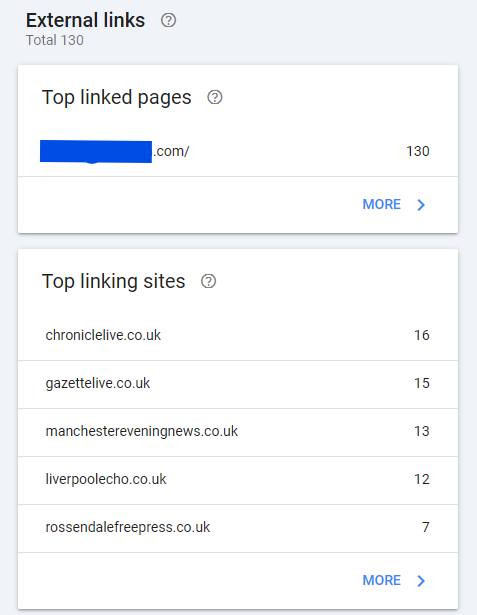
To see what you've already got, open Google Search Console (it's free) and find the Links section near the bottom of the left-hand menu. It lists your top linked pages and the sites linking to you most:
A vote only counts if Google counts it, so do these actually move you up the results?
Are backlinks a ranking signal for electricians?
Yes, backlinks are a ranking signal for electricians, because Google uses links from other websites as one of the ways it judges which pages deserve to rank. A link from a relevant, trusted site tells Google that someone else vouches for your business. The limits are real: a backlink won't rescue a thin page, and bought, swapped or software-built links can do more harm than good. Electrician SEO Pro rates backlinks as a genuine off-page ranking signal, and for a local trade it's one that still carries real weight.
Pages pass "link equity" to each other through links, and the more authoritative the linking page, the more it sends. That comes from PageRank, a ranking factor in Google's original algorithm, and the same power spreads around your own site through internal linking.
Big sites show the scale. When I searched "dog food", Pet-Supermarket.co.uk topped the results, and Ahrefs showed 48K backlinks from 3.1K linking websites:
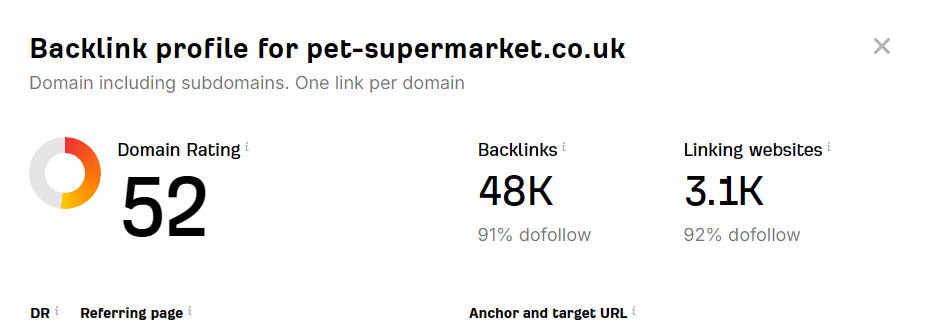
That doesn't prove links alone did it, and a local electrician isn't playing at that scale. You're up against other electricians in your town, not every pet shop in Britain. Same principle, though: links are how Google measures who else vouches for you.
So which links count for the most?
What makes a backlink worth having for an electrician?
A backlink is worth having for an electrician when it comes from a real, relevant site that people actually visit, sits in the main content of a page and is a normal followed link. Sites about trades, construction, property, home improvement or your own town are the best fit, and one strong link on a clean page beats one buried among a hundred others. Electrician SEO Pro's rule is quality over quantity: a link a customer could actually click and trust beats a link nobody will ever see.
Here's the checklist I work to:
- Relevance. Trades, building, property and home improvement sites fit best. A gardening blog linking to an electrician looks a bit odd, but one unrelated link won't wreck your profile, I promise.
- Authority. A link from the BBC is powerful. One from a spammy directory in some far corner of the web isn't. Google doesn't publish an official authority score, so this is my own checklist after seven-plus years in SEO: regular search traffic, a natural-looking link profile, no spam or ad clutter, and a related topic. Semrush and Ahrefs give rough scores, but those are their numbers, not Google's.
- Placement. In the main content, near the top. A footer link among a hundred others is wallpaper. That's my view of what a real reader will notice, not a Google rule.
- One site, one strong link. My rule of thumb: the first link from a site is worth the most, and more from the same place give you less and less.
- Anchor text. The clickable words matter too, and I cover them in anchor text for electricians.
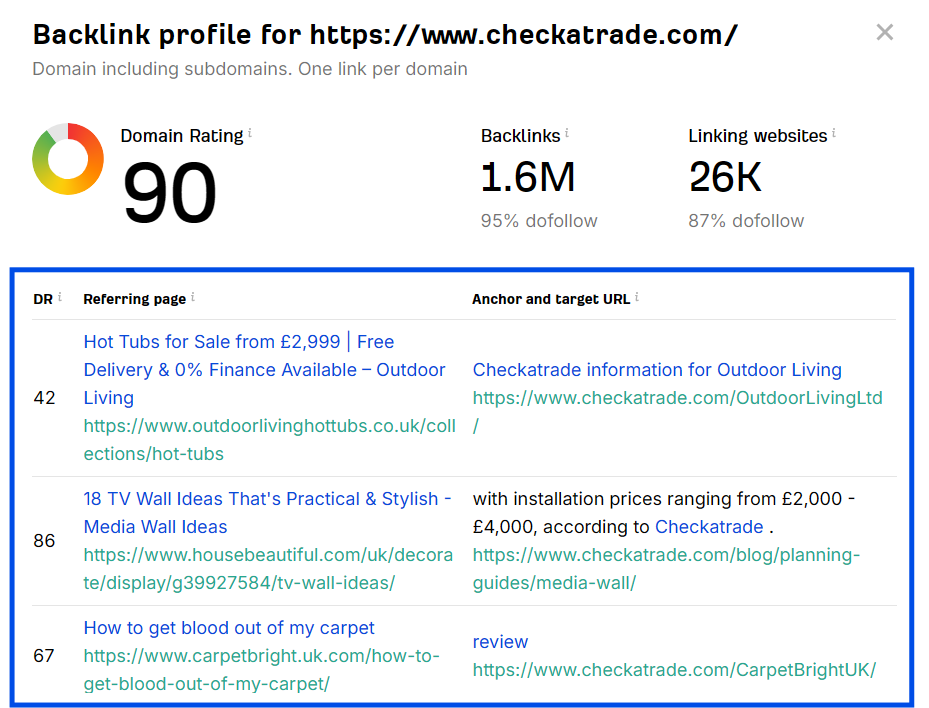
Relevance is a good aim, not a rule. When I looked at Checkatrade's profile, plenty of its links came from pages with nothing to do with electricians: hot tubs, TV walls, carpet cleaning. Not brilliant for relevance, and it's still one of the biggest names in the trade.
One thing can quietly water a good link down, though: the tag on it.
Do nofollow links help electricians?
Nofollow links do little to help electricians rank, because the nofollow, sponsored and ugc tags tell Google a link isn't a straightforward endorsement, so it carries very little ranking weight, if any. A normal link with no tag is what you want. Nofollow links still send visitors and still put your name in front of people, so they aren't worthless. In Electrician SEO Pro's view, normal followed links are the ones to aim for, and nofollow ones are a bonus.
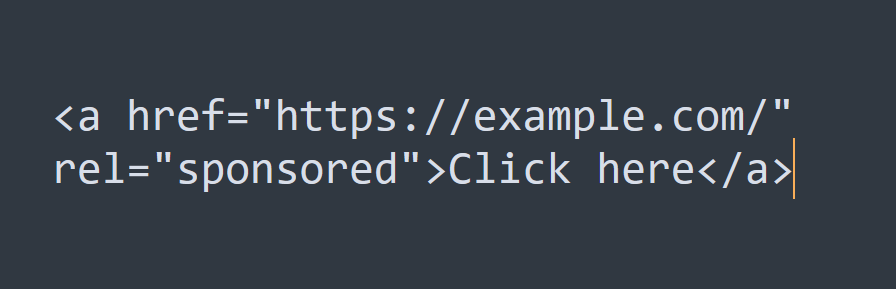
There are three tags to know. rel="nofollow" means the site isn't endorsing the link, rel="sponsored" means it's a paid placement, and rel="ugc" means it's user-generated content, like a comment or forum post. Google's guidance on qualifying outbound links explains what each is for.
To check a link, right-click it on the page, choose Inspect and look at its code. A tag looks like this, and no tag means a normal link:
Got a good mention that came through as nofollow? Ask nicely. This is the message that's worked for me before:
Hi! Thanks so much for mentioning us in your article. I noticed the link is set as 'nofollow'. If you're happy to vouch for the work, would you consider changing it to a standard link?
Plenty of sites won't change theirs, and that's their call.
Once you know what a good link looks like, the next worry is how many you need.
How many backlinks does an electrician need?
There's no set number of backlinks an electrician needs, and Google doesn't publish one. What counts is the quality and fit of the links, and whether you have enough good ones to compete with the electricians already ranking for your searches. Electrician SEO Pro's view is that ten solid links from real sites in your area beat ten thousand from shady directories.
Offers along the lines of "1,000 backlinks for £20" are exactly the bulk links to steer clear of. Backlinks aren't magic, and they don't turn up on their own: you earn them through useful content and relationships. To judge your own number, look at where the electricians ranking above you get their links.
One kind of link deserves a closer look if you're chasing the Map Pack: local ones.
Do local backlinks help electricians show up in Google Maps?
Yes, local backlinks help electricians show up in Google Maps and local results, because prominence is one of the three things Google uses to rank local businesses, and Google bases it partly on how many websites link to the business. A link from a local news site, school, supplier or community group ties your business to your area. Electrician SEO Pro's shorthand is local links, local trust, local rankings.
How Google determines local ranking lists relevance, distance and prominence, and says prominence is based on information like how many websites link to a business and how many reviews it has.
My view is that a link from a reputable Sunderland business directory, a local school or a neighbourhood blog does more for your Maps visibility than one from a huge generic tech blog. Google doesn't say local links outrank other links, so treat that as my judgement, not a rule. And don't stress if the site's authority score is low: a local link from a real site is still worth having.
So where do you actually find them?
Where can an electrician get local backlinks?
An electrician can get local backlinks from the businesses they already deal with, such as suppliers, builders, letting agents and fellow trades, from trade bodies and reputable local directories, from local news and community sites, and from clubs they sponsor. Start with the relationships you already have, because a link from someone who has seen your work is the easiest one to get. Electrician SEO Pro's rule is to ask for the link that fits naturally, not to chase every link going.
- Business relationships. Tool suppliers and wholesalers, local builders, plumbers and gas engineers, letting agents, contractors who pass you work, the solar or security people you team up with. They trust you, so ask: "Any chance you'd list me as a trusted electrician on your website?" Suppliers with a "trusted contractors" page are a good target. If you honestly rate their work, offer a short testimonial or case study too.
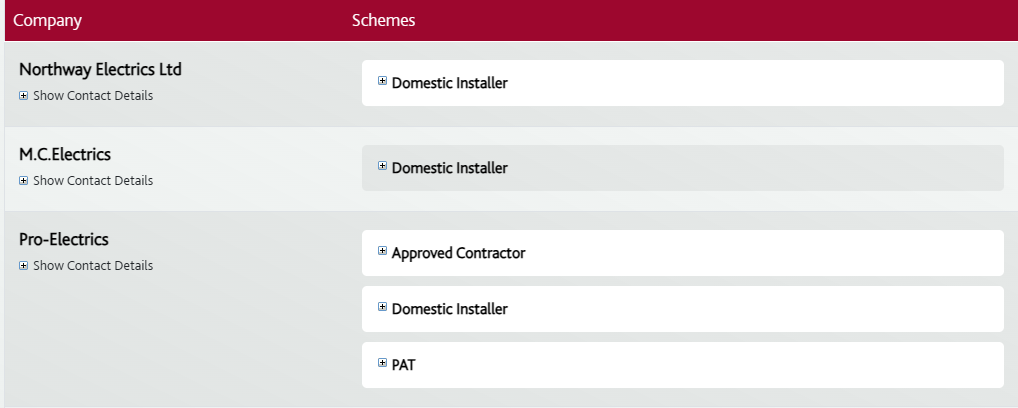
- Directories and trade bodies. Your local Chamber of Commerce, the NICEIC contractor finder and respected directories such as TrustATrader and MyBuilder. Not every listing links to your website, and some tag the link nofollow, so check yours. My guide to local citations for electricians covers where to be listed.
- Local news and community sites. Local papers, schools, community groups and events you've been part of, as long as they're reputable.
- Sponsoring a local team. Football, rugby, cricket, whatever your town is into. Grassroots clubs often list their sponsors on a website or Facebook page, sometimes with a link. It can cost a few hundred pounds, so check they do before you pay. The goodwill is the main prize, and the link is a bonus, not the reason to pay.
Those are the quick ones. For the rest, you have to give people something worth linking to.
How can an electrician earn backlinks with content and outreach?
An electrician can earn backlinks through content and outreach: publishing a genuinely useful guide that other sites want to reference, offering a working replacement for a dead link on someone else's page, answering journalist requests, writing guest posts for relevant sites, and checking where competing electricians get their links. Each works by giving another site a reason to link, not by asking for a favour. Electrician SEO Pro's view is that useful content plus polite outreach beats any shortcut.
- Write a proper resource. Say you write an in-depth guide called "How Much Does Rewiring a 3-Bed House Cost in Liverpool?" If it answers real questions, local blogs, landlords and housing sites have a reason to link to it. Find local blogs or forums already discussing the topic and send a short note: "Hey, I've just written a guide on this, happy for you to use it if it helps." More topics to start from are in my guide to content ideas for electricians.
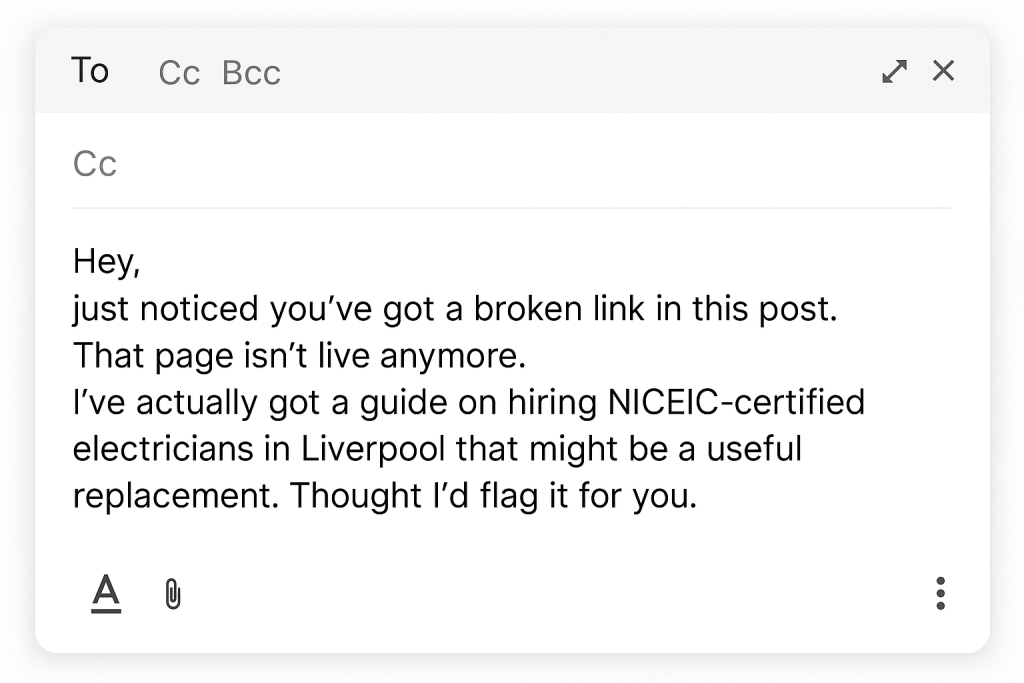
- Fix someone's broken link. A site links to a page that no longer exists. You spot it, tell them and offer a working, relevant page of yours. No pushiness, no sales pitch. Only do it if your page really is a good replacement.
- Answer journalist requests. When a journalist or writer asks for expert comment on an electrical topic, a short, useful answer can earn a mention and often a link. I cover how in getting backlinks by answering journalist requests.
- Write a guest post. A useful article on a relevant site, with a link back in your bio or one natural sentence. Guest posting for electricians shows how to find sites, write and pitch.
- Look at who links to the electricians beating you. Find an electrician ranking well for something like "EV charger installation in Newcastle" in your area, put their site into a backlink checker (Ahrefs and Semrush both have one) and read the list of referring domains. Is it a trades blog you could write for? A local directory you're not on? A contractor site you should be listed on? You can't copy a link, but you can earn one from the same kind of place. Don't offer link swaps while you're at it.
Here's the sort of email I'd send about a broken link (made up):
That's the good stuff. Now the stuff to run a mile from.
What backlink tactics should electricians avoid?
The backlink tactics electricians should avoid are buying links, swapping links with other sites as a ranking tactic, using software to create links, getting links from low-quality directories and leaving keyword-stuffed links in comments, forum signatures or site footers. Google's spam policies class these as link spam, and sites that break them may rank lower or not appear in results at all. Electrician SEO Pro's rule is never to pay for a link that is meant to lift rankings.
Google's spam policies define link spam as creating links to or from a site mainly to manipulate search rankings. Buying or selling links, excessive link exchanges ("link to me and I'll link to you"), automated link creation and low-quality directory links are all on the list. Google says it spots this through automated systems and, as needed, human review that can lead to a manual action.
Here's the difference in practice:
- Bad: a "1,000 backlinks for £20" deal. Better: a link from a supplier's trusted contractors page.
- Bad: swapping links with every electrician in the area. Better: a link from a client or partner who genuinely recommends you.
- Bad: links made by software. Better: one useful guide that people choose to link to.
Best case, bad links get ignored. Worst case, your site drops down the results and takes your other marketing with it. If someone built links like these for you in the past, get a proper look at where your links come from.
Backlinks are built, not bought.
Want a hand building backlinks for your electrical business?
You can get a hand building backlinks for your electrical business from Electrician SEO Pro, as part of a full SEO service, or earn them yourself by asking the people you already work with and publishing something worth linking to. Link building is the slowest, most relationship-heavy part of SEO to do on your own, so it pays to start with the easy local links and build from there. Either way, the aim is the same: a few strong links from real, relevant sites.
If you've got the time, my free off-page SEO guide for electricians covers the rest of the off-page stage. If you'd rather spend your evenings quoting jobs than emailing editors, I can take it off your hands, alongside the rest of your SEO. Link building is part of every campaign I run.
See how I can help, or crack on yourself.
Over to you.