The best URL structure for an electrician's website is short, lowercase and readable: hyphens between words, the service (and the town, where a page covers one) in the address, and no dates, ID numbers or underscores. Electrician SEO Pro's rule is that a URL should tell a customer what the page is before they click it. URL words are a ranking signal, a light one, so it pays to set clean URLs up at the start.
What does URL structure mean on an electrician's website?
URL structure on an electrician's website means how your page addresses are organised: the domain, any folders for services or areas, and the final slug that names each page. A clear structure labels every page like a room in a building, so customers and Google know what they're looking at before they click. An address like /rewiring says what's on the page, where /page-id-57 says nothing.
I think of it as the blueprint of the site. Take these two (both made up):
- Messy: /2023/08/electrician-blog-about-rewiring
- Clean: /rewiring-guide
The first is bloated, dated and vague. Google doesn't need the timestamp and neither do your visitors. The second is short, descriptive and straight to the point.
Here's a clean address with folders for the service, the town and the page. Longer than the second one, but still clean and organised:

Three questions to check any URL. Does it look clean? Does it look human? Would someone know what the page is about before they click? Three yeses and you're done.
A tidy address looks good, but does it help you rank?
Is URL structure a ranking signal for electricians?
Yes, URL structure is a ranking signal for electricians, a light one: the words in an address give Google a clue about what the page covers, and a clean structure makes pages easier to crawl and easier for customers to trust. Electrician SEO Pro treats clean URLs as a sensible foundation rather than a shortcut. On its own, a tidy address won't lift a weak page, and rewriting the URLs of pages that already rank carries more risk than reward.
Google ranks pages, not websites, so every page needs a clear identity, and the address is part of it. Clean, logical URLs make it easier for Google to understand what each page is about, crawl your site efficiently and match the page to the right search intent.
If your URLs are hard for a human to read, they're probably hard for Google too.
Where it really pays is on a new site or a new page. Getting the address right costs nothing, which makes it one of the cheapest wins in SEO.
So what does a good one look like?
What does a good URL look like for an electrician's website?
A good URL for an electrician's website looks like a short, readable label: lowercase words separated by hyphens, naming the one thing the page is about. Electrician SEO Pro's checklist is short, readable, lowercase, hyphens, no dates and no deep nests of folders. Aim for an address a customer could read aloud and still know what they'd find.
Say you want to rank for fuse box upgrades in Leeds. My example (made up) would be:
yourdomain.com/electrician-leeds/fuse-box-upgradesHere's why it works:
- Short and readable. Nobody wants to click a jungle of numbers and symbols.
- The right keywords, naturally. "Electrician Leeds" and "fuse box upgrades" are both in there.
- A logical order. Location first, then the service. That's my preference rather than a Google rule, but it keeps every Leeds page together.
A few habits that keep URLs working:
- Hyphens, not underscores.
- Lowercase, always.
- Skip filler words like "and", "the" and "of".
- Don't stuff keywords. Clean beats crammed.
- Keep folders flat-ish. Nothing five levels deep.
And a few formats that nail it (all made up):
- Service page: /rewiring
- Location page: /electrician-manchester
- Blog post: /blog/eicr-vs-pat-testing
No mystery. Just focused URLs that help Google understand your site and help customers land exactly where they need to be.
How much keyword is too much, though?
Should electricians use keywords and towns in their URLs?
Yes, electricians should use their main keyword and, where a page covers one town, that town in their URLs, once and in plain words. Electrician SEO Pro's rule is one service and one town at most per URL. An address like ev-charger-installation-leeds works, while one that squeezes in the whole page title does not, because it reads like a sentence and tells nobody anything extra.
Here's the difference (both made up):
- Stuffed: /how-to-install-an-ev-charger-in-leeds-guide
- Clean: /ev-charger-installation-leeds
The first is a mouthful for humans and bots. The second is a digital street sign: clear, focused, done. You're not writing a novel.
The URL doesn't have to carry the keyword alone, either. It also belongs in the title, the headings and the opening paragraph, and I cover where in my guide to keyword placement. If you're building a town page, my service page blueprint for electricians walks through it.
Then there are the things that should never be in a URL.
Should electricians avoid dates, capitals and underscores in their URLs?
Yes, electricians should avoid dates, capital letters and underscores in their URLs, because dates make a page look out of date, and mixed capitals and underscores create awkward, inconsistent addresses. Electrician SEO Pro's rule is lowercase letters and hyphens only, with a date in the address only for genuinely time-sensitive content such as a news update or a promotion. Everything else on an electrician's website should have an address that never ages.
Dates first. They make the URL longer, and they make the page look old even if you updated it yesterday (both made up):
- Dated: /2021/07/fuse-box-upgrade
- Better: /fuse-box-upgrade
Now capitals and underscores (also made up):
- Wrong: /Fuse_Box_Installation
- Right: /fuse-box-installation
Lowercase and hyphens are easier to read, easier to type and harder to get wrong. Google's URL structure guidance recommends hyphens over underscores and treats URLs as case sensitive, so pick one version of an address and stick to it.
Now the how: setting this up in WordPress.
How do electricians set up clean URLs in WordPress?
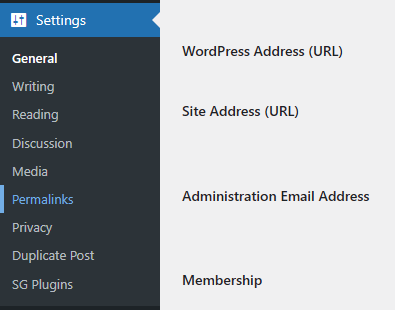
Electricians set up clean URLs in WordPress by going to Settings, then Permalinks, choosing the Post name option and clicking Save. From then on, every new page and post gets a short address built from its title. Electrician SEO Pro's rule is to do this first on a new electrician site, before any pages are built, and then to trim each slug by hand so it names one service or topic.
The steps:
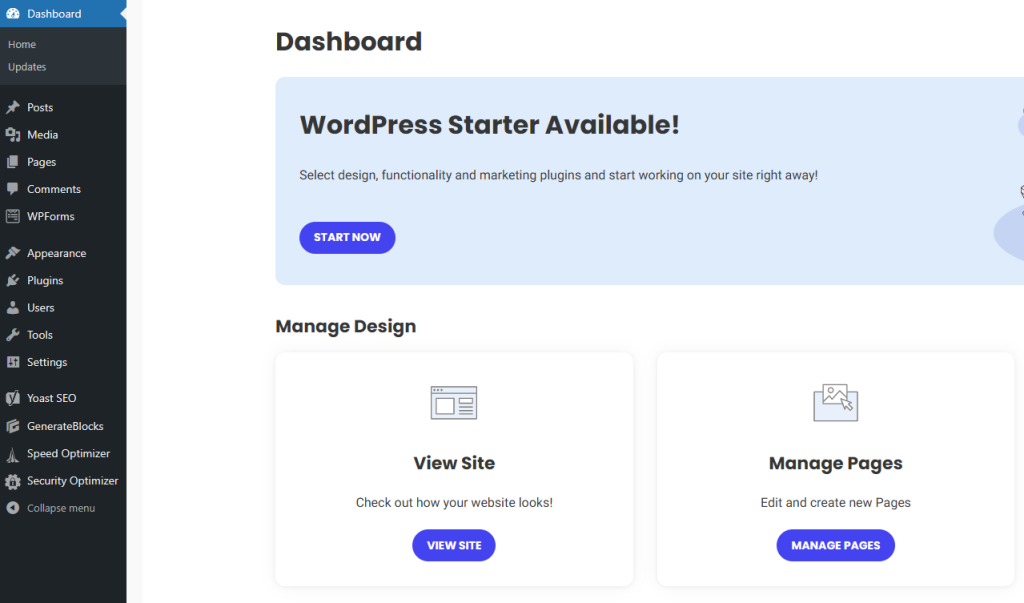
- Head to your WordPress dashboard.
- Go to Settings, then Permalinks.
- Select the option called "Post name".
- Hit Save.
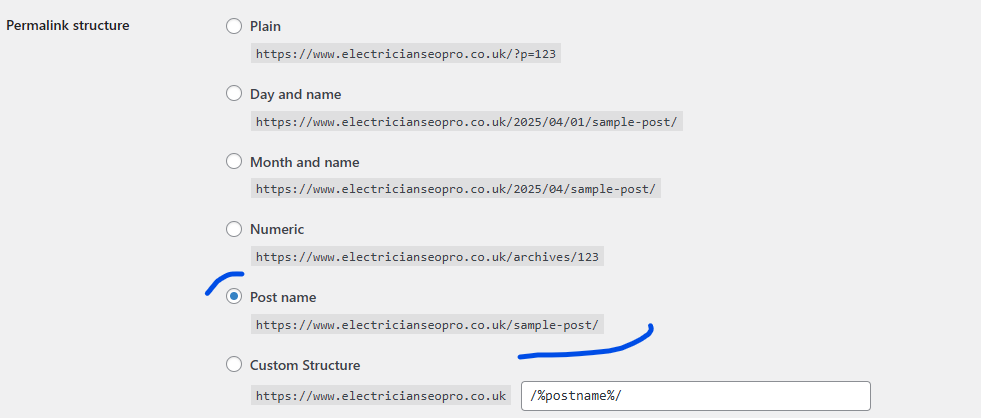
Done. WordPress also offers plain, date-based and numeric options, and the plain one gives you an address like yourdomain.com/?p=123. That tells Google nothing about the page. It's like answering "maybe" when someone asks what you do for work. I always do this as the very first thing on a new site.
The catch is a live site, and that's the last question.
Is it safe for an electrician to change URLs on a live website?
An electrician can safely change URLs on a live website only if every old URL gets a 301 redirect to its new address, because otherwise the old links break and visitors land on a 404. Electrician SEO Pro's rule is to change the site-wide permalink structure only on a brand-new site, or one that isn't ranking for anything yet, and to put redirects in place before changing any single page that already brings in traffic.
The wrong way breaks the old link, tanks the page's visibility and gives visitors a dead end. The right way keeps your rankings, backlinks and SEO value pointed at the new address. How redirects work is in my 301 redirect guide for electricians.
Here's the easy route if you use Yoast SEO Premium. Its redirect manager does the 301 for you:
- Open the page you want to clean up.
- Edit the URL slug to something short and clean, for example from /fuse-box-replacement-leeds-electrician-page to /fuse-box-upgrades-leeds (both made up).
- Yoast creates a 301 from the old URL to the new one.
- Click Update.
The redirect manager is a Premium feature, so check which version you're running. Either way, type the old address into your browser afterwards and make sure it lands on the new page. Two minutes now saves a lot of headaches.
Want a hand getting your electrician website's URLs right?
You can get a hand getting your electrician website's URLs right from Electrician SEO Pro, as part of a full SEO service for your electrical business, or sort them yourself with a quick permalink check in WordPress. URLs are one part of on-page SEO, alongside titles, headings, content and internal links. Whichever route you take, the rule stays the same: short, lowercase, readable, and set up before the pages go live.
If you've got the time, everything you need is in my free on-page SEO guide for electricians. If you'd rather spend your evenings pricing jobs than editing permalinks, I can take it off your hands, alongside the rest of your SEO.
See how I can help, or crack on yourself.
Over to you.