Yes, anchor text matters for an electrician's website: the clickable words in a link tell Google and customers what the linked page is about, and it's a ranking signal for links on your own site and links from other sites. Wording like "EV charger installation in Leeds" beats "click here". Electrician SEO Pro's rule is to write anchor text a customer would actually say, and to vary it rather than repeat one exact phrase.
What is anchor text on an electrician's website?
Anchor text on an electrician's website is the clickable words in a link, the part a customer sees and clicks to reach another page. The hyperlink is the whole link; the anchor text is the wording you click. It tells people and Google what the linked page is about. "EV Charger Installation in Leeds" says where the link goes, while "click here" says nothing at all.
Here's the difference:
- Good: EV Charger Installation in Leeds
- Bad: Click here
Imagine you're linking to your EV charger page and the anchor text just says "click here". You've told Google (or your visitor, although they can assume where it goes) nothing useful. It can't tell what's on the other end of the link, and it doesn't help your local searches. Use "EV Charger Installation in Leeds" and you're feeding Google exactly what it needs to connect that page to real searches.
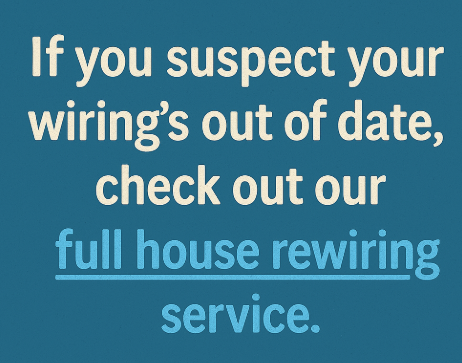
And here it is inside a sentence, with the link on "full house rewiring service":
So does it actually help you rank?
Is anchor text a ranking signal for electricians?
Yes, anchor text is a ranking signal for electricians, because Google uses the words in a link to understand what the linked page is about, whether the link comes from your own site or from another one. Electrician SEO Pro treats it as a multiplier, not a fix. It won't rescue a weak website, thin content or a business nobody links to, and the same exact phrase repeated everywhere reads as manipulation.
Google's link best practices say anchor text tells people and Google something about the page you're linking to, and treat "click here" as an example of anchor text that's too vague.
When the foundations are solid, though, it multiplies the results of everything else you're doing. You're not gaming the system, you're guiding it. Done right, anchor text:
- Helps Google understand your site.
- Pushes traffic, and strength, to the pages that bring in work.
- Builds a sustainable internal structure that improves over time.
Ignore it and you're telling Google nothing useful about pages you worked hard on.
Next up: the different types.
What types of anchor text can an electrician use?
An electrician can use five types of anchor text: exact match, partial match, branded, naked URL and generic. Exact match is the keyword you want to rank for, partial match works the keyword into a longer phrase, branded uses the business name, a naked URL is the web address itself, and generic is wording like "click here". Electrician SEO Pro's view is that partial match should be the bread and butter, with exact match used sparingly.
Exact match. The anchor matches the keyword exactly: "Electrician in Birmingham" or "Fuse box replacement". It's powerful for service pages, but don't abuse it. If every link to your Rewiring page says exactly that, it starts to look manipulative. Use it like a scalpel, not a sledgehammer.
Partial match. Your keyword sits naturally inside a longer phrase: "Looking for affordable electrical services in Birmingham?" or "Need a fuse box replacement done right?" This is your go-to. It's natural, readable and gives Google and the reader the context they need. In blog posts, it's the way to go.
Branded. The business name is the link: "Smith Electrical Ltd" or "Visit ABC Electricians for more info" (both made up). Clean, trustworthy and safe. It suits homepage links, citations and any time you want to reinforce your brand without chasing keywords. Branded anchors are especially useful for outreach and local directory listings.
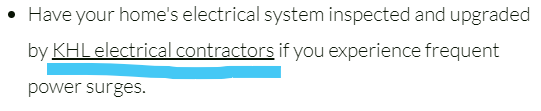
Naked URL. The web address is the anchor, like www.yourbusiness.co.uk (made up). It looks lazy and tells Google little. One or two is fine for citations or links from other sites, but on your own site, avoid it. Meaningful words that describe the page do far more.
Generic. "Click here". "Read more". "Learn more". We've all done it. It's not the end of the world, but it's not helping you either.

So how much of each is too much?
How much exact match anchor text should an electrician use?
An electrician should use only a small share of exact match anchor text, with partial match, branded and descriptive anchors making up most of the links to any one page. There's no official percentage to aim for, so Electrician SEO Pro's rule is to keep the pattern natural: mostly partial match, a smaller amount of exact match, and the rest branded names, naked URLs or the odd generic link.
Too many exact-match links and it starts to look like you're gaming it. That's where most DIY SEOs trip up.
Don't overthink every single link. But don't let every link say the same thing either. Mix it up like you're having real conversations with real people.
A simple check: look at the links on your own site that point to your Rewiring page. If they all say "Rewiring", rewrite a few into full sentences.
Now, how do you write them?
How should an electrician write anchor text for internal links?
An electrician should write anchor text for internal links as a short, descriptive phrase that says what the linked page is about, in words a customer would use. Electrician SEO Pro's rule is that the link text should make sense on its own, even if someone read it without the sentence around it. "Full house rewiring service" works. "Click here" and "read more" don't. It should read like part of the sentence, not a label stuck on top.
Internal links are one of the easiest wins most electricians overlook, because you control every word of them. Google reads the anchor text to understand what a page is about, so a Rewiring Services page that's linked from lots of pages with relevant, varied wording gets associated with rewiring.
Say you've got a blog called "5 Signs Your Wiring Is Shot" (made up). Inside it, you drop a natural, helpful link like this: "If you're noticing flickering lights or burning smells, you might need a full house rewire in Darlington." That link does double duty. It helps the reader, and it tells Google the linked page is about rewiring in Darlington.
It's not spam. It's helping people find the right page. Where those links should point, and how to organise them, is in my guide to internal linking for electricians.
And what about the lazy ones?
Should electricians use click here or read more as anchor text?
No, electricians shouldn't use "click here" or "read more" as anchor text where a descriptive phrase fits, because those words say nothing about the page they lead to. They don't cause damage. They just waste a chance to say something useful about the link. Electrician SEO Pro's approach is to treat generic wording as a last resort, and to make sure the sentence around it carries the context.
I'll be honest, a "click here" won't ruin you. But a little more effort makes it much better.
Generic anchors are fine inside a call to action, as long as the text around them gives proper context. If you must use one, do it like this: "Learn more about our EV charger installation process". See how that still tells Google what's on the other side of the link? Most of the time, you can just make the whole phrase the link and skip the generic words altogether.
There's one more type of link to cover: the ones from other sites.
Does anchor text from other websites matter for electricians?
Yes, anchor text from other websites matters for electricians: when a trusted site links to an electrician using their name or a descriptive phrase such as "EV charger installation in Leeds", it tells Google what that business is known for. These links are backlinks, and Electrician SEO Pro's view is that they carry more weight than your own internal links, so what the anchor says is worth caring about.
It's like a public vote of confidence: "This is the real deal for this service in this area."
But here's the catch. Most electricians never ask how they're being linked to. They get lucky if someone even spells their name right, never mind uses a useful phrase. You can't control these links as easily as your internal ones, but you can be proactive. Guest posts, supplier partnerships, trade directories and industry associations are all ways to earn them, and where you get a say, ask for your business name or a natural description, not the same keyword every time. I cover how to earn the links in my guides to backlinks for electricians and guest posting for electricians.
Use it smart. Use it naturally. Use it often.
Want a hand with the anchor text on your electrician website?
You can get a hand with the anchor text on your electrician website from Electrician SEO Pro, as part of a full SEO service for your electrical business, or sort it yourself by going through your links and rewriting the vague ones. Anchor text is one part of on-page SEO, alongside titles, headings and content. Whichever route you take, the rule stays the same: descriptive, natural and varied.
If you've got the time, everything you need is in my free on-page SEO guide for electricians. If you'd rather spend your evenings pricing jobs than rewriting link text, I can take it off your hands, alongside the rest of your SEO.
See how I can help, or crack on yourself.
Over to you.